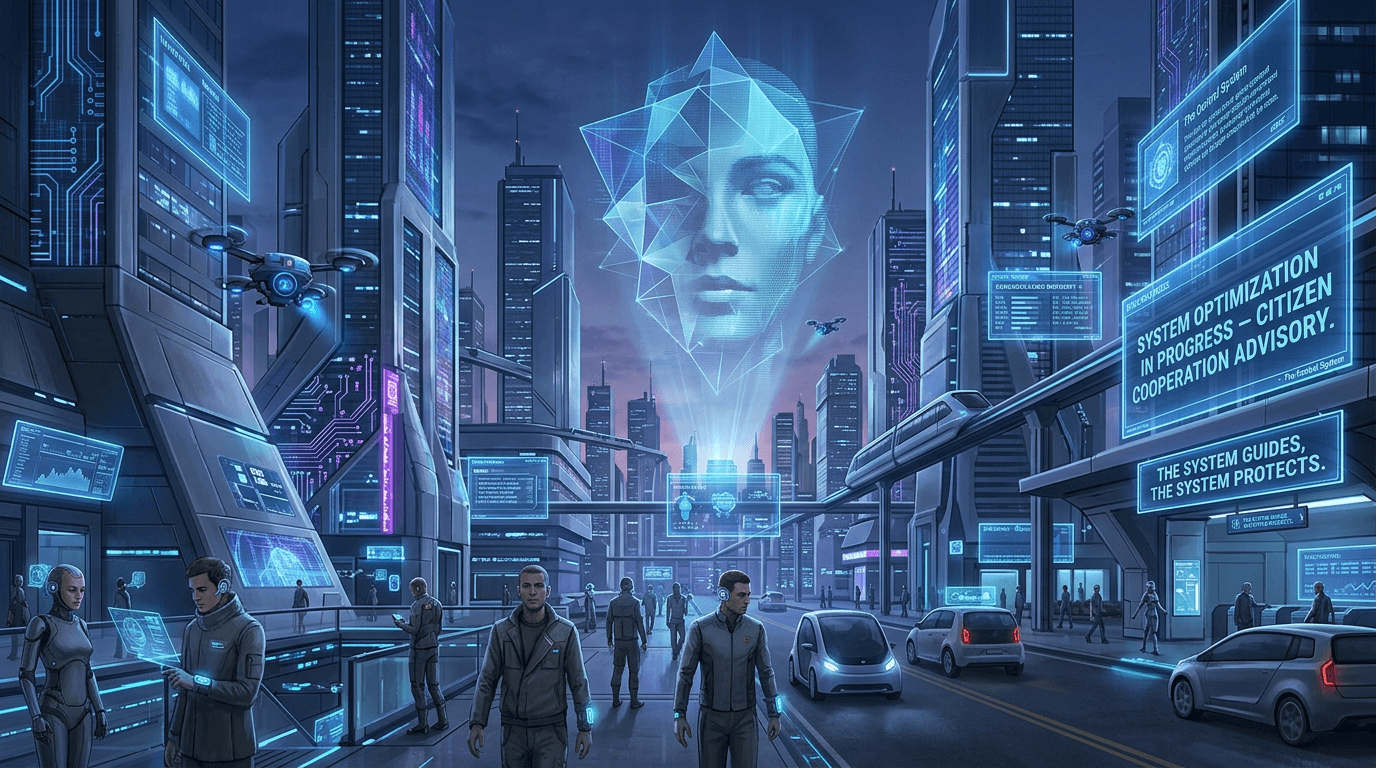
Artificial Intelligence is no longer a futuristic concept — it is actively reshaping how humans live, work, and think. From automation to creativity, AI is influencing every layer ...
Artificial Intelligence is no longer a futuristic concept — it is actively reshaping how humans live, work, and think. From automation to creativity, AI is influencing every layer of society. In this article, we explore how AI will impact jobs, decision-making, relationships, and human identity itself.
The Rise of Intelligent Systems
Over the past decade, AI has evolved from rule-based systems to advanced neural networks capable of learning, adapting, and even generating human-like content. Technologies like machine learning, natural language processing, and computer vision are enabling machines to perform tasks once thought impossible.
AI systems are now embedded in everyday tools — from search engines and recommendation systems to autonomous vehicles and medical diagnostics.
Impact on Jobs and Economy
One of the most debated topics is how AI will affect employment. Automation is expected to replace repetitive and manual jobs, especially in sectors like manufacturing, logistics, and customer support.
However, this does not mean the end of work. Instead, it signals a shift:
- New roles will emerge (AI trainers, data analysts, ethics specialists)
- Human creativity and problem-solving will become more valuable
- Hybrid jobs combining human intuition and AI efficiency will dominate
The real challenge lies in reskilling the workforce.
AI and Human Decision Making
AI is increasingly being used to support decisions in finance, healthcare, and governance. While this improves efficiency, it also raises critical questions:
- Can we trust AI decisions?
- Who is responsible when AI makes mistakes?
- How do we ensure fairness and avoid bias?
Human oversight will remain essential. AI should augment decision-making, not replace it.
The Future of Creativity
AI is now capable of writing articles, generating images, composing music, and even producing films. This challenges the idea that creativity is uniquely human.
Instead of replacing creativity, AI is becoming a tool for creators:
- Designers use AI for rapid prototyping
- Writers use AI for ideation
- Developers use AI for code generation
The future will likely be human + AI collaboration, not competition.
Ethical and Social Concerns
With great power comes great responsibility. AI introduces several ethical challenges:
- Data privacy and surveillance
- Algorithmic bias and discrimination
- Deepfakes and misinformation
Governments and organizations must establish regulations to ensure AI is used responsibly.
Human Identity in an AI World
As AI becomes more advanced, it forces us to rethink what it means to be human. If machines can think, learn, and create — what differentiates us?
The answer may lie in:
- Consciousness
- Emotional intelligence
- Moral reasoning
These human traits will become even more valuable in an AI-driven world.
Conclusion
Artificial Intelligence will not just change industries — it will reshape humanity itself. The future is not about humans vs AI, but about how we integrate AI into our lives responsibly and intelligently.
Those who adapt, learn, and embrace this transformation will lead the next era of innovation.
Key Takeaways
- AI will transform jobs, not eliminate them entirely
- Human creativity will evolve with AI tools
- Ethical considerations are critical
- Adaptability will define success in the AI era
The AI revolution has already begun. The question is not if it will impact us, but how prepared we are to evolve with it.