
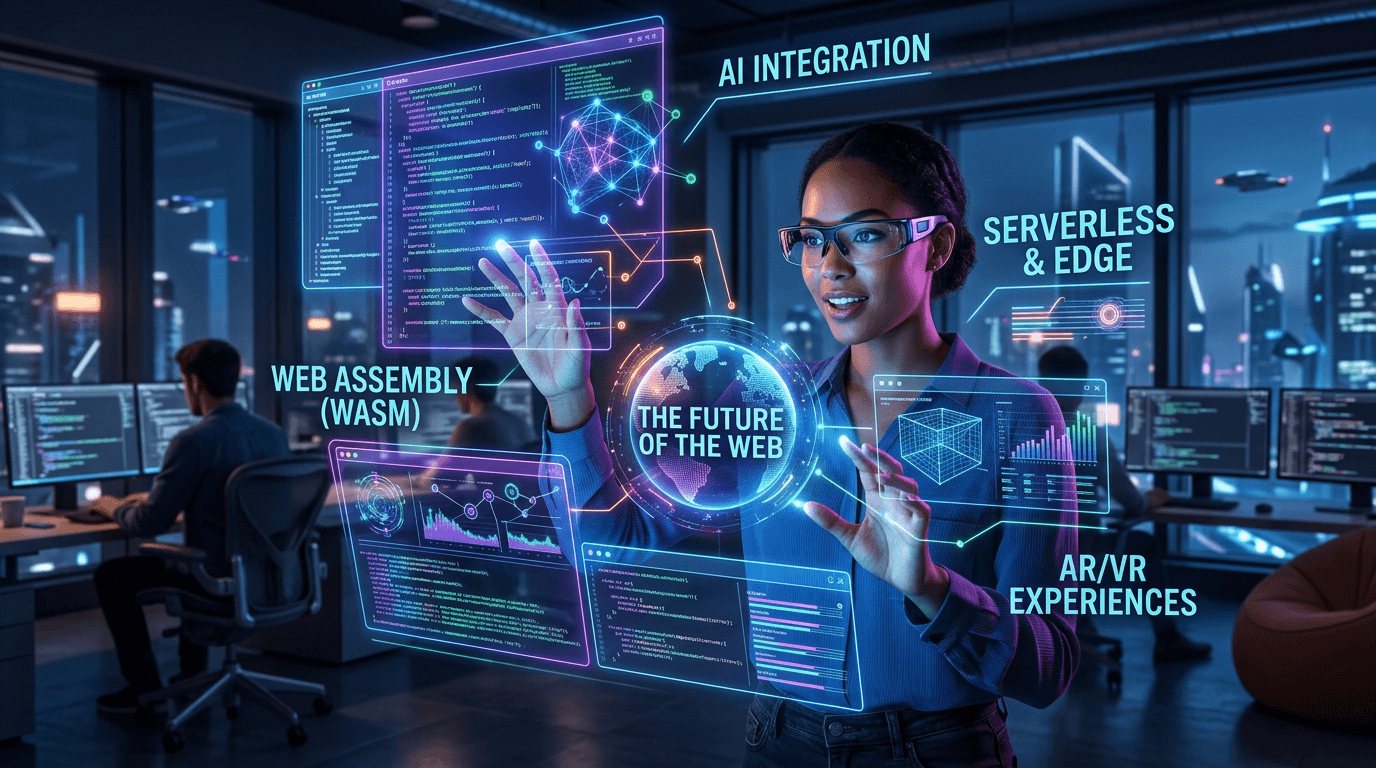
Web development is evolving faster than ever. With new frameworks, AI-powered tools, and changing user expectations, developers must adapt quickly to stay relevant. In this article...
Web development is evolving faster than ever. With new frameworks, AI-powered tools, and changing user expectations, developers must adapt quickly to stay relevant. In this article, we explore the major trends shaping the future of web development.
Rise of AI in Development
AI is no longer just a buzzword. Tools like code assistants, automated testing, and intelligent debugging are becoming part of everyday workflows.
Developers are now focusing more on problem-solving while AI handles repetitive tasks.
The Shift Toward Server Components
Frameworks like Next.js are pushing server-side rendering and server components to improve performance and SEO.
This reduces client-side JavaScript and improves page load speeds significantly.
Edge Computing and Performance
Users expect lightning-fast experiences. Edge computing allows apps to run closer to users, reducing latency.
This is becoming critical for global applications.
Component-Driven Development
Reusable components are now the backbone of scalable applications.
Libraries and design systems help teams maintain consistency and speed up development.
Security and Privacy First
With increasing cyber threats, security is no longer optional.
Developers must focus on:
- Secure authentication
- Data encryption
- Privacy compliance
Conclusion
The future of web development is not just about writing code — it’s about building fast, secure, and scalable experiences.
Developers who adapt to these trends will lead the next generation of the web.
Key Takeaways
- AI will enhance developer productivity
- Server-side rendering will dominate
- Performance and edge computing are critical
- Security must be prioritized
The web is evolving — and so should you.